That expensive pair of leather shoes rarely fails all at once. More often, the first problem is underfoot. The upper still looks sharp, the outsole may have life left, but the inside feels flat, loose, or strangely hard by the end of the day. If you are wondering whether to replace insoles in leather shoes, the short answer is yes – but only when the replacement matches the shoe’s structure, fit, and material quality.
This is where many owners of premium footwear get caught out. Insoles look simple, so they are often treated like a generic add-on. In well-made leather shoes, they are part of the comfort system, the fit profile, and sometimes even the internal support. Change them carelessly, and the shoe can feel tighter, shallower, or unstable. Replace them properly, and the same pair can feel refreshed without losing its character.
Why insoles matter more in leather shoes
Leather shoes respond differently than mass-market sneakers. They mold to the foot over time, and their interiors often rely on a balance between lining, footbed shape, heel grip, and toe room. When the insole wears down, that balance shifts.
You may start to notice pressure on the ball of the foot, heel slip that was not there before, or a tired feeling after a few hours of wear. Sometimes the issue is not visible at first glance. The top layer may still appear intact, but the cushioning underneath has compressed, the edges have curled, or the insole has started to separate from the base.
For luxury and premium leather shoes, this matters even more. A poor insole replacement can trap moisture, create friction against delicate lining, or alter how the shoe flexes. That is why proper insole rectification is not just about softness. It is about preserving comfort while respecting the original build of the shoe.
Signs it is time to replace insoles in leather shoes
The clearest sign is a change in feel. If a pair used to be comfortable and now feels hard, uneven, or less supportive, the insole is a likely cause. Compression is normal with use, especially in shoes worn for long office days, travel, or regular city walking.
Odor that does not go away after airing out can also point to an insole that has absorbed too much moisture over time. In leather shoes, trapped sweat can affect not only hygiene but also the surrounding lining. Replacing the insole early can prevent a more involved interior restoration later.
Visible damage is another strong indicator. Peeling top covers, cracked leather footbeds, flattened padding, lifted edges, and thinning at the heel are all signs of wear. If you feel your foot sitting lower on one side, or if one shoe feels different from the other, uneven insole breakdown may already be affecting alignment.
There is also the fit question. Sometimes people assume a shoe has stretched too much, when in fact the insole has compressed and created extra space. In other cases, they add a thick off-the-shelf insert and then wonder why the vamp feels tight. Both problems start with the same misunderstanding: the insole changes volume inside the shoe.
Can all leather shoe insoles be replaced?
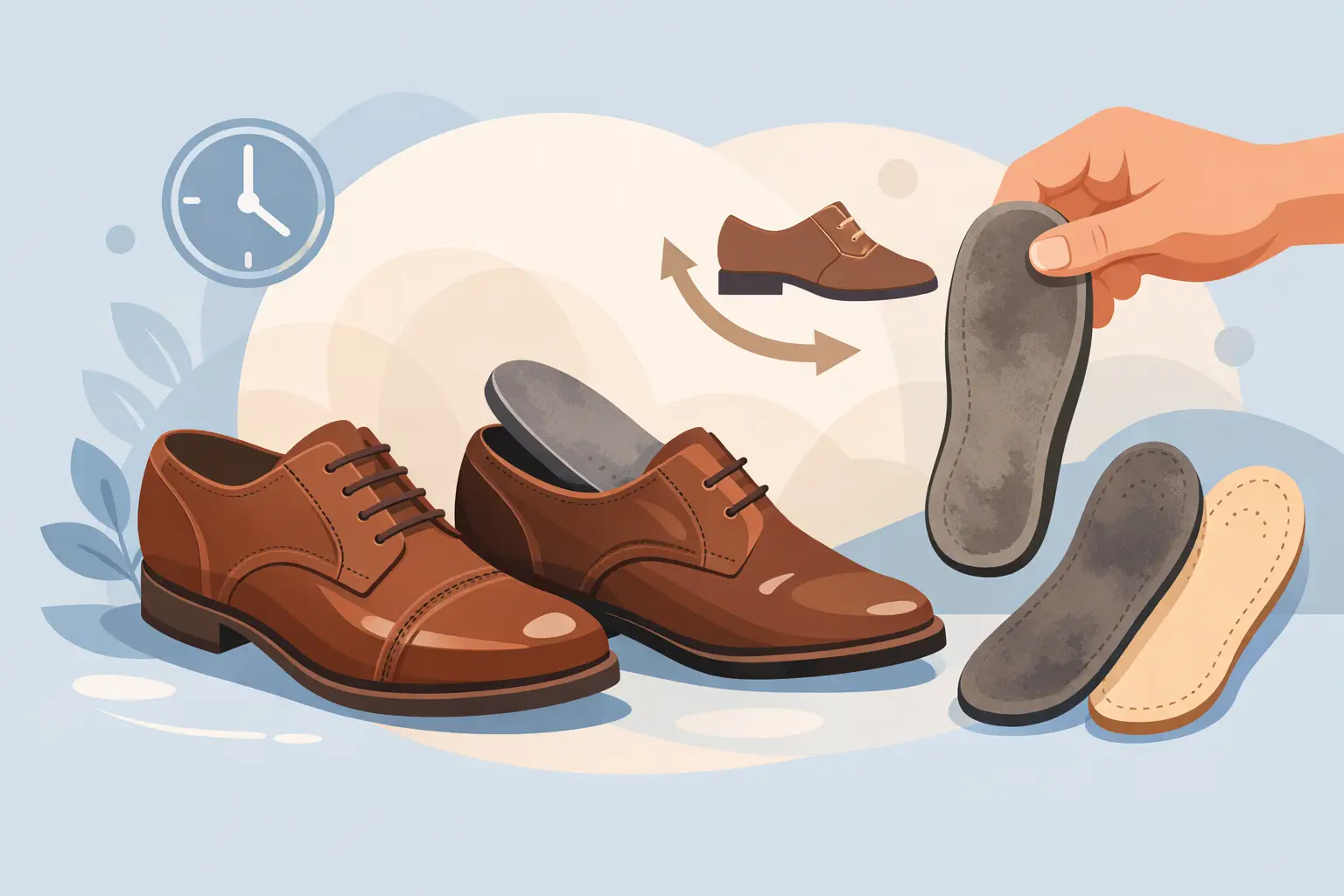
Not always in the same way. Some leather shoes have removable insoles, and these are the simplest cases. A direct replacement can restore comfort quickly if the thickness and shape are right.
Others have built-in insoles or layered internal footbeds that are not designed to be pulled out casually. In these shoes, replacement becomes a repair job rather than a quick swap. The old material may need to be lifted carefully, the base prepared, and a new insole cut and fitted to the exact profile.
It also depends on the type of shoe. Dress shoes, loafers, ankle boots, and luxury leather sneakers each have different internal construction. A formal leather oxford usually has less room for added bulk than a casual sneaker-style leather shoe. A pointed toe pump leaves little margin for thickness changes. Boots may tolerate more structure, but only if the heel hold remains correct.
So yes, you can often replace insoles in leather shoes, but the right method depends on construction, available depth, and the result you want – comfort, hygiene, fit correction, or all three.
Choosing the right replacement insole
The wrong insole usually fails in one of two ways. It is either too thick and changes the fit, or too soft and collapses quickly. Premium leather shoes deserve a more precise approach.
Material matters first. Leather-topped insoles tend to pair well with leather interiors because they breathe better and preserve a more refined feel. Foam-heavy sports inserts may feel plush for a short time, but they can create heat, hold moisture, and look out of place inside a tailored shoe.
Thickness matters just as much. Even a few millimeters can affect toe room and heel position. If the shoe already fits closely, a slim insole or partial insole may be the better answer. If the original has fully flattened, a replacement that restores the original height can bring the fit back into balance.
Support should be chosen with restraint. Not every leather shoe can accommodate a highly contoured orthopedic insert without changing the way it wears. For some owners, a modest cushioned replacement is enough. For others, especially those who stand for long hours or travel often, a more structured custom solution may be worthwhile.
DIY replacement vs professional insole rectification
A simple removable insole in a casual leather shoe can sometimes be replaced at home. If the shape is standard, the fit is forgiving, and the upper is not delicate, a careful at-home swap may work.
But built-in insoles, luxury shoes, and shoes with a refined fit should be handled professionally. This is not about making the process sound complicated. It is about avoiding secondary damage. Pulling at adhesive, forcing in a bulky insert, or trimming poorly can scar the lining, distort the footbed, or create pressure points that were never there before.
Professional insole rectification is especially valuable when the problem is not only the insole itself. Sometimes wear inside the shoe is connected to heel counter fatigue, lining damage, or sole imbalance. Replacing the insole alone will not solve those issues. A proper inspection helps separate a surface comfort problem from a structural one.
For customers who invest in premium pairs, that distinction matters. Preservation is cheaper and smarter than waiting until the interior has broken down enough to affect the whole shoe.
What to expect from a proper insole replacement
A good result should feel natural almost immediately. The shoe should not feel stuffed, shallow, or unstable. Your heel should sit securely, your forefoot should have enough room, and the interior should look clean and well-finished rather than patched.
The replacement should also respect the original style of the shoe. In a premium repair setting, the goal is not just to add cushioning. It is to restore function without making the inside look visibly altered or cheapened.
This is why experienced repair specialists assess more than the insole. They look at wear pattern, internal depth, leather condition, and how the pair is used. Office shoes worn on rotation have different needs than travel loafers or leather sneakers used daily. A service-led repair process saves time because the solution is matched to the actual use case, not guessed from the surface.
At Shoe Clinic, this kind of evaluation is part of the premium care mindset. The aim is always to extend the life of the item while protecting comfort, appearance, and the integrity of the original craftsmanship.
How to make new insoles last longer
Once you replace insoles in leather shoes, a few habits will help protect the repair. Give shoes time to air out between wears, especially in warm climates or after long days. Moisture is one of the biggest reasons interiors break down early.
Use shoe trees where appropriate, because they help maintain shape and reduce internal creasing. Keep the inside clean and dry, and do not ignore minor discomfort. When a shoe starts to feel different, it usually means something is changing inside.
Rotation also helps more than people realize. Wearing the same pair every day compresses the insole faster and gives the lining less time to recover. Premium shoes last longer when they are treated as long-term pieces, not disposable daily tools.
When replacement is not enough
There are cases where a fresh insole will improve comfort but not fully solve the problem. If the shoe has a collapsed heel area, damaged lining, broken internal support, or worn outsole affecting balance, the discomfort may return quickly.
That is why experienced repair advice is worth more than a generic insert. A well-kept leather shoe can often be restored beautifully, but the repair needs to match the real source of wear. Sometimes the insole is the issue. Sometimes it is only the first visible symptom.
If your leather shoes still look worth keeping but no longer feel right, pay attention to what your feet are already telling you. Replacing the insole at the right time is a small repair that can protect a much bigger investment.