A leather bag that starts showing fine surface lines can still look elegant. A pair of luxury shoes with deep cracks across the toe box is a different story. That is why the question can cracked leather be repaired does not have a simple yes or no answer. In many cases, yes, cracked leather can be repaired, improved, and protected from getting worse. But the result depends on how deep the damage goes, what caused it, and whether the item receives proper treatment early enough.
Leather is skin, not plastic. It flexes, dries, absorbs oils, reacts to heat, and shows stress over time. When it begins to crack, it is usually a sign that the fibers have lost moisture, flexibility, or surface protection. Some cracking is mostly cosmetic. Some is structural. Knowing the difference is what determines whether an item can be restored beautifully or only stabilized.
Can cracked leather be repaired, or only improved?
The most honest answer is this: cracked leather can often be repaired visually and functionally, but not every item can be returned to a factory-new condition. Fine cracks in the finish layer are usually the most repairable. These can often be cleaned, conditioned, filled where appropriate, recolored, and refinished so the surface looks smoother and more even.
Deeper cracks are more complex. Once the leather fibers themselves have split or weakened, the goal shifts from simple cosmetic correction to reinforcement and restoration. An experienced leather specialist may still be able to improve appearance significantly and extend the item’s life, but the original untouched texture may not be fully recoverable.
That distinction matters, especially with premium footwear, handbags, jackets, and boots. A rushed DIY fix may hide damage for a week. A proper repair works on the actual condition of the material, not just the symptom you can see.
What causes leather to crack in the first place?
Cracking rarely happens overnight. It usually develops from a mix of age, friction, dryness, sun exposure, poor storage, and neglected care. Leather that is repeatedly bent in the same area, like shoe vamp creases or handbag handles, will naturally face more stress than flatter panels.
Heat is one of the biggest offenders. Leaving leather goods in hot cars, near windows, or in dry indoor conditions can strip out natural oils and make the surface brittle. Cheap cleaners can do similar damage. So can over-conditioning with the wrong products, which may soften the surface temporarily while weakening finish stability over time.
Luxury leather is not immune. In fact, premium leather often deserves more thoughtful care because the finish, texture, and color depth are part of what gives it value. Once cracks begin, delaying repair usually makes the damage more noticeable and more expensive to correct.
How to tell whether cracked leather is repairable
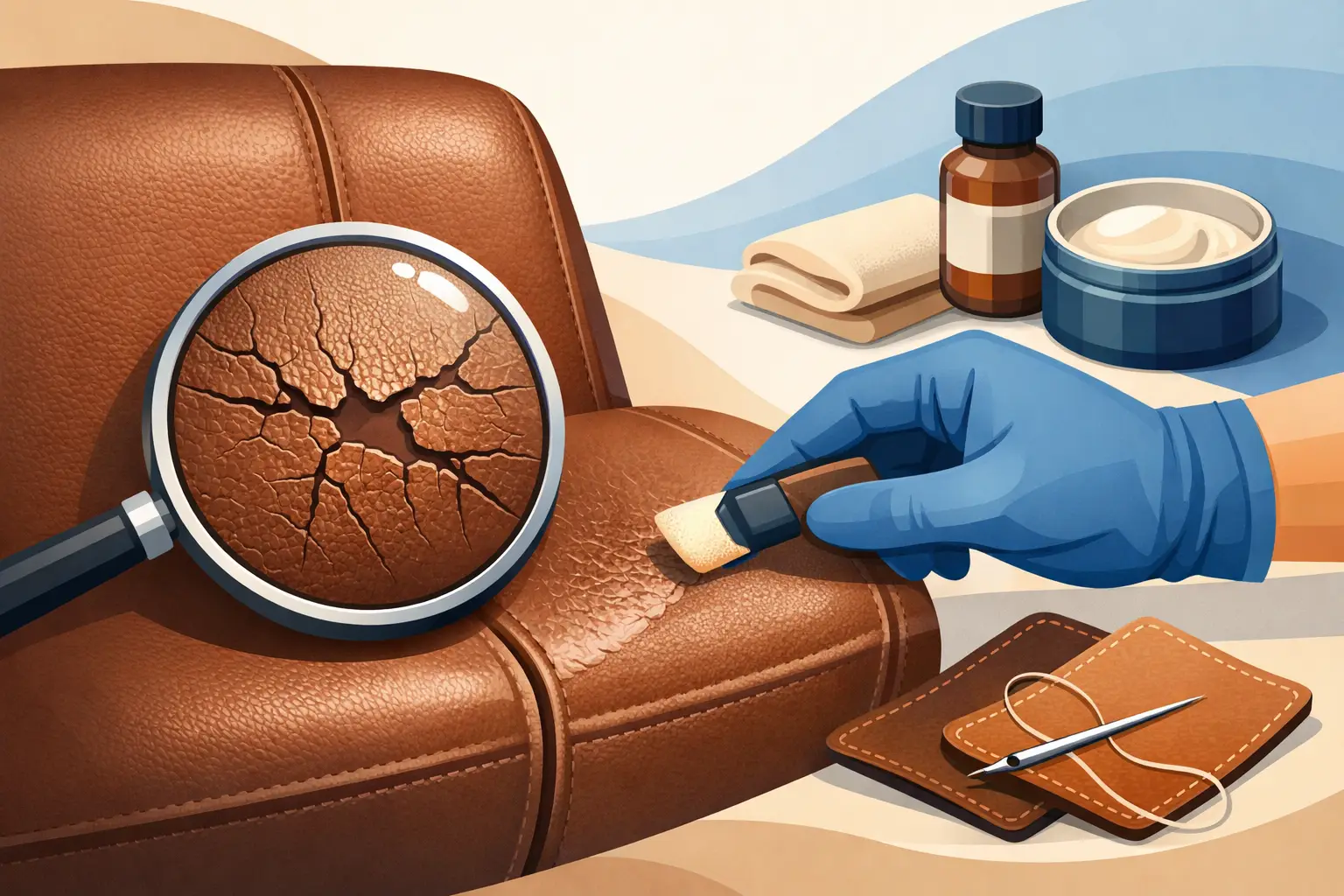
Surface-level cracking often looks like small lines or a slightly rough, dry network on the top finish. The leather may still feel stable underneath. This type of damage usually responds best to professional cleaning, conditioning, pigment correction, and finish restoration.
Moderate cracking tends to show visible splitting, color loss, and texture disruption. You may notice roughness when you run a finger across the area. On shoes, this often appears across flex points. On bags, it may show on corners, handles, or flap edges. This level is still commonly repairable, but it requires more than conditioner.
Severe cracking is harder to reverse. If the leather feels thin, papery, flaked, or actually torn, the damage may have moved beyond surface repair. At that stage, a specialist may recommend reinforcement, panel repair, edge rebuilding, recoloring, or partial replacement depending on the item. For very high-value pieces, these interventions can still be worthwhile because they preserve use, shape, and brand value.
Can cracked leather be repaired at home?
Sometimes, but only if the damage is light and you are careful. A home care approach can help when leather is dry, slightly dull, or showing early surface lines. Gentle cleaning followed by a quality leather conditioner may improve flexibility and reduce the appearance of minor cracking. That said, it is not a cure for genuine structural damage.
The risk with DIY repair is overconfidence. Many retail repair kits use heavy fillers, mismatched color compounds, or glossy topcoats that sit unnaturally on the leather. On standard items, that can already look poor. On designer shoes or a luxury handbag, it can seriously reduce the item’s appearance and resale value.
Home treatment is best thought of as maintenance, not restoration. If the leather has actual cracking with visible separation, missing pigment, peeling finish, or damage in a high-visibility area, expert repair is the safer route.
What professional cracked leather repair usually involves
A proper repair begins with assessment. Not all leather behaves the same way, and not all cracks should be treated with the same method. Smooth calfskin, embossed leather, suede-adjacent finishes, and coated luxury leathers each require a different approach.
The repair process often starts with deep but controlled cleaning to remove dirt, body oils, waxes, and product buildup. This matters because repair materials will not bond correctly to a contaminated surface. After cleaning, the leather may be conditioned or rebalanced depending on its dryness and flexibility.
If the cracking has broken the surface finish, a leather technician may use specialized compounds to reduce the appearance of splits and even out the texture. Color restoration follows, matched as closely as possible to the original shade. Then a finish is applied to restore the correct sheen, whether matte, satin, or semi-gloss.
For shoes and boots, cracked uppers may also need shape support during repair because creasing and collapse can make the surface damage look worse. For handbags, corners and handles often need extra attention due to friction and hand oils. Jackets require a more flexible finish because the repaired area still needs to move naturally with wear.
This is where a premium workshop makes a visible difference. Good repair is not just about making cracks less obvious. It is about preserving the look, feel, and character of the item.
When repair is worth it – and when it may not be
If the item is high quality, frequently used, sentimentally important, or part of a luxury wardrobe, repair is often the better decision. Well-made leather goods are built to justify restoration. A quality pair of shoes, a favorite briefcase, or a designer bag usually has enough material and structure to make expert work worthwhile.
If the leather is heavily cracked across multiple panels, flaking extensively, or already tearing at stress points, the calculation changes. The item may still be repairable, but expectations need to be realistic. The objective may be to restore presentation and extend life rather than erase every sign of wear.
Cost also depends on the item and the damage. A small repair on a handbag corner is not the same as restoring cracked leather across both shoes, matching color precisely, and rebuilding finish consistency. The right repair is rarely the cheapest option, but it is often the one that prevents replacement.
How to prevent cracked leather after repair
Once leather has been restored, maintenance becomes part of protecting the investment. Keep leather away from direct heat and prolonged sun exposure. Store shoes with support inside so they hold shape, and avoid stacking bags in a way that crushes corners or strains handles.
Use appropriate leather care products sparingly and consistently rather than aggressively. More product is not better. The goal is to maintain suppleness and protection without oversaturating the material. Cleaning also matters. Dust, sweat, and everyday grime slowly break down finishes, especially on frequently handled pieces.
Most importantly, address early warning signs. If leather starts looking dry, faded, stiff, or rough at flex points, act before visible cracking deepens. Preventive care is always easier than corrective repair.
For clients who bring in premium items early, the results are usually stronger, more natural, and more cost-effective. At Shoe Clinic, that early intervention often makes the difference between a straightforward restoration and a more involved reconstruction.
Cracked leather is not always the end of the road for a valuable item. In many cases, it is simply a sign that the leather needs skilled attention before wear turns into permanent loss. The sooner you treat it with the respect good leather deserves, the better it tends to return the favor.