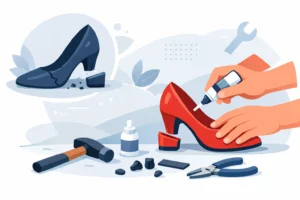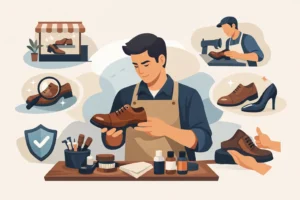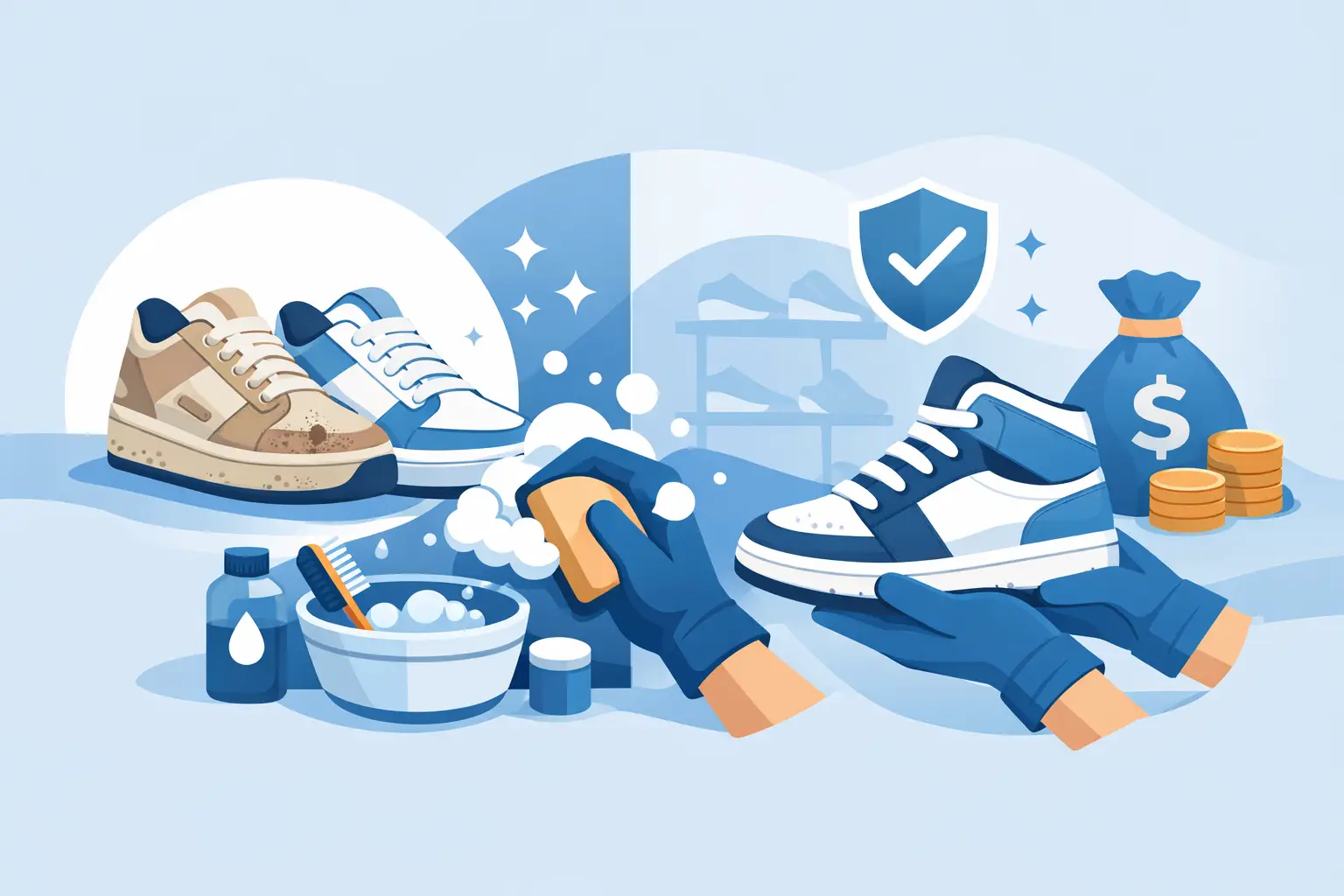
A stain rarely looks serious at first. One coffee splash on nude leather, one dark transfer mark on a white sneaker sole, one rain spot on suede – and suddenly the pair you wear most looks neglected. That is exactly where a professional shoe stain removal service matters. Not because every mark can be erased, but because the wrong cleaning method can set the stain deeper, strip the finish, or permanently change the texture.
Premium shoes do not respond well to trial-and-error cleaning. Leather, suede, nubuck, patent finishes, fabric trims, glue lines, edge paint, and hand-finished color all react differently. A luxury pair also carries another concern: appearance must be restored without making the repair obvious. The goal is not just cleaner shoes. It is keeping the original character, structure, and value intact.
What a professional shoe stain removal service actually does
Most people think stain removal is just cleaning with stronger products. In reality, proper stain treatment starts with diagnosis. A technician has to identify what caused the mark, how long it has been there, what material it sits on, and whether the stain has only affected the surface or already altered the finish.
A water mark on smooth calfskin needs a very different approach than oil on suede or dye transfer on a pale leather heel. Even when two stains look similar, the treatment may change completely depending on the shoe’s construction. Hand-painted leather, bonded trims, soft lambskin, and porous suede each come with different risk levels.
That is why premium workshops assess before they clean. They test stability, choose a controlled treatment, and work toward stain reduction without damaging the surrounding material. In some cases, stain removal is enough. In others, the best result comes from combining cleaning with recoloring, refinishing, or polishing to restore a balanced appearance.
Why DIY stain removal often makes luxury shoes worse
Online advice tends to make everything sound simple. Use vinegar. Use baking soda. Use dish soap. Use a magic eraser. The problem is that household cleaning shortcuts are built for convenience, not material preservation.
Leather can dry out, fade, or develop uneven patches after aggressive spot treatment. Suede can become rough, bald, or darkened if oversaturated. White shoes often suffer from over-cleaning, where the stain lifts but the surface becomes dull or discolored. Even products sold as safe cleaners can leave tide lines, alter sheen, or weaken adhesives when used without control.
There is also the issue of partial cleaning. If one section is scrubbed harder than the rest, the stained area may become visually cleaner than the surrounding leather, creating a patch effect. On premium footwear, that can be as noticeable as the original stain.
A professional shoe stain removal service is not valuable because it promises miracles. It is valuable because it understands limits, protects delicate materials, and chooses the least invasive path to the best possible result.
Which stains are most treatable
Some stains respond very well when addressed early. Surface dirt, light water spotting, many food spills, fresh transfer marks, and some oil-based stains can often be improved significantly. Scuff-related discoloration on finished leather is also usually manageable, especially when the underlying material is still intact.
Sneaker staining is a category of its own. Rubber foxing, midsoles, mesh panels, and fabric tongues each trap dirt differently. In these cases, successful stain removal depends on treating each material separately instead of washing the entire shoe aggressively.
Suede and nubuck require more caution, but they are not hopeless. Marks can often be reduced through dry cleaning methods, controlled stain lifting, and texture restoration. The key is speed. The longer a stain remains, the more likely it is to oxidize, spread, or bond with the material.
When stain removal becomes restoration
Not every stain is truly removable. Some marks penetrate so deeply that they leave behind discoloration even after the contaminant is lifted. Others trigger a chemical change in the finish. Ink, harsh dye transfer, old oil stains, and untreated water damage are common examples.
This is where experienced repair work becomes more valuable than simple cleaning. If the stain has altered the color or surface, a restoration specialist may blend the area through refinishing, color correction, or surface treatment rather than chasing complete extraction. That approach often produces a better visual result than repeated cleaning attempts.
For high-end shoes, this distinction matters. A pair does not need to look newly manufactured. It needs to look refined, well cared for, and consistent. Good restoration respects the original design rather than masking damage with heavy-handed fixes.
Materials matter more than most customers realize
Smooth leather is usually the most forgiving, but even here there are differences. Full-grain leather, patent leather, metallic finishes, embossed textures, and hand-burnished surfaces each require a tailored process. A cleaner that is safe on one may permanently mark another.
Suede and nubuck are more absorbent, which makes stain control harder. They can also show pressure marks, shading differences, and texture loss after poor handling. Patent leather brings another challenge – transfer marks may sit on the glossy surface, but harsh rubbing can dull the shine.
Then there are mixed-material luxury shoes. It is common to see leather combined with fabric, elastics, lining materials, edge coatings, and decorative hardware. A stain near one seam may affect multiple surfaces at once. Premium treatment means understanding how the whole shoe behaves, not just the visible mark.
What to expect from a premium service process
A serious workshop should make the process easy without making it vague. Customers with premium footwear want clarity. They want to know what is possible, what is not, and how the item will be handled.
That usually begins with an assessment, often supported by photos for initial guidance. Once the pair is inspected, the team can identify the stain type, material sensitivity, and likely result. This matters because honest expectations are part of premium service. Some stains can be fully removed. Others can only be reduced. A trustworthy specialist says so upfront.
After assessment, treatment is carried out in stages. The stain is addressed carefully, the surrounding area is balanced, and the shoe may then be conditioned, refinished, or polished if needed. Final checks are just as important as the cleaning itself. The pair should return looking coherent, not overworked.
For customers who rotate luxury shoes, formal footwear, travel pairs, or designer sneakers, convenience also matters. A service-led repair model with consultation, intake, treatment, and return saves time while protecting more expensive items from unnecessary replacement.
When to send your shoes in immediately
If a stain is fresh, do not wait for it to settle. Blot gently if appropriate, avoid rubbing, and keep the pair away from direct heat. Then get a professional opinion. Fast action is especially important for wine, coffee, oil, ink, and rain exposure on suede or untreated leather.
You should also seek help quickly if a mark appears after using a home cleaner. Secondary damage can spread if the wrong product has softened the finish, left residue, or caused color lift. In those cases, continued DIY cleaning usually compounds the problem.
Luxury shoes deserve a different standard of care. If the pair has sentimental value, resale value, or frequent-use importance, the cost of professional treatment is often lower than the cost of visible damage.
Choosing the right shoe stain removal service
Not every repair shop is equipped for premium stain work. Basic cleaning is one thing. Material-specific restoration is another. Look for a specialist that understands leather finishing, suede handling, recoloring, and repair workflows beyond cleaning alone.
This matters because stain removal is rarely an isolated issue. A marked shoe may also need edge touch-up, conditioning, sole cleaning, interior sanitization, or minor cosmetic restoration. A workshop with broader repair capability can treat the problem more intelligently and deliver a stronger final result.
That is where a premium leather care business such as Shoe Clinic stands apart. The value is not simply in removing marks. It is in handling high-value shoes with the judgment, restraint, and restoration skill they require.
A good pair should not be retired because of one bad stain. With the right treatment, many shoes can return to the rotation looking polished, wearable, and properly cared for – which is exactly how premium ownership should feel.