A loose sole always looks like a quick fix until the wrong adhesive turns a clean repair into a stiff, messy bond that fails after a few wears. If you are asking what is a good shoe repair glue, the real answer depends on the shoe material, the area of damage, and whether you want a temporary hold or a lasting repair that protects the original structure.
For premium shoes, especially leather pairs, the glue matters far less than most people think if the surface preparation is poor. A strong adhesive on the wrong material, or applied without proper cleaning, can create more damage than the original separation. That is why some at-home fixes work well on casual footwear, while luxury shoes, boots, and designer pieces usually need a more controlled repair approach.
What is a good shoe repair glue for most shoes?
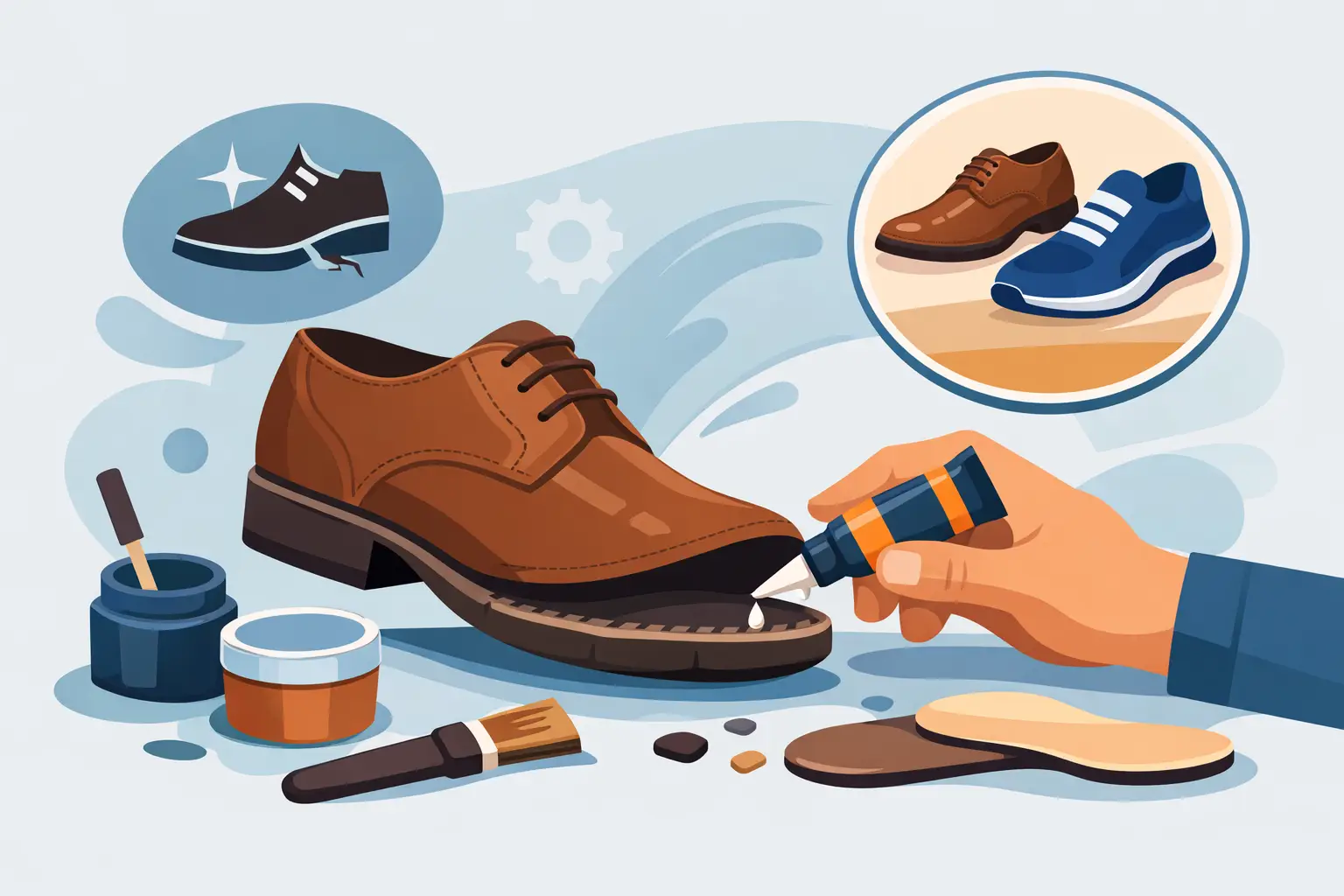
A good shoe repair glue is usually a flexible contact adhesive or specialty shoe adhesive designed to move with the shoe instead of drying rock hard. Shoes bend, absorb pressure, and face heat, dust, and moisture. Standard household glue often cannot tolerate that movement.
For sole separation, rubber edges, and general reattachment, flexible shoe adhesives tend to perform best. They are made to bond materials such as leather, rubber, and some synthetics while keeping a bit of elasticity after curing. That flexibility is what helps the repair survive walking.
Epoxy can be useful in very specific cases, especially on rigid parts, but it is not usually the first choice for wearable shoe areas that need to flex. Super glue may look tempting because it bonds quickly, but it often dries too brittle for repeated movement. White craft glue, wood glue, and basic all-purpose glue are poor choices for shoe repair and usually fail fast.
The best glue depends on the material
When people ask what is a good shoe repair glue, they are often really asking which glue works on their particular pair. Leather loafers, rubber-soled sneakers, suede heels, and formal dress shoes do not respond the same way.
Leather uppers and leather soles
Leather needs a clean, controlled bond. A quality contact adhesive is often the preferred choice because it can grip prepared leather surfaces without becoming overly rigid. The challenge is that leather also shows damage more easily. Excess glue, staining, or uneven pressure can leave visible marks, especially on light colors or luxury finishes.
For high-end leather shoes, the repair is rarely just about sticking two parts together. The angle of the sole, the edge finish, and the pressure during curing all affect the final result.
Rubber soles
Rubber can be more difficult than it looks. Some rubber compounds bond well, while others resist adhesives unless the surface is correctly roughened and cleaned. Flexible shoe glue is generally the safest starting point for a detached rubber sole or toe edge.
If the sole is heavily worn, though, glue alone may not be enough. Once the material has thinned or started to crumble, replacement is often more reliable than reattachment.
Synthetic materials
Many modern shoes mix foam, synthetic leather, mesh, and molded rubber. That combination makes repair less predictable. One adhesive may hold one layer but fail on another. In these cases, product selection becomes more technical, and even a decent glue may only offer a partial repair if the materials are already breaking down.
Heels and structured areas
Heels, heel caps, and reinforced sections take concentrated pressure. These areas sometimes need more than glue – they may need rebuilding, pinning, replacement, or reshaping. Adhesive can be part of the repair, but not always the complete solution.
What to look for in a shoe repair glue
The best adhesive for shoes is not the one with the strongest marketing claim. It is the one that matches how shoes actually wear.
A good repair glue should stay flexible after curing, bond to leather or rubber without excessive stiffness, and tolerate daily movement. It should also resist light moisture and heat better than ordinary glue. Drying time matters too. Fast-setting products can be helpful, but only if they still allow precise placement and proper bonding.
Clean application is another factor that gets overlooked. On premium footwear, appearance matters as much as hold. A glue that strings, smears, or leaves a glossy residue can reduce the value of the repair even if it technically sticks.
When glue works well and when it does not
Glue is useful for minor sole separation, loose edges, lifting insoles, and some detached trim. These are the kinds of issues where the original components are still in good condition and simply need re-bonding.
It is much less effective when the shoe has structural fatigue. If the midsole is crumbling, the heel block is unstable, the stitching has failed, or the leather has cracked, adhesive alone will not restore proper wear. It may hold briefly, but the weakness remains underneath.
This is especially true with luxury and formal footwear. A premium shoe often has layered construction, shaped support, and finished edges that can be compromised by a rough adhesive repair. What looks like a simple gap may actually signal that the shoe needs sole work, stitching, or internal reinforcement.
Common mistakes with DIY shoe glue repairs
Most failed home repairs come down to one of three issues: the wrong adhesive, poor preparation, or not enough curing time.
Dirty surfaces are a major problem. Dust, old glue, oil, and polish residue reduce adhesion. Even a strong shoe glue will struggle if it is applied over contamination. Too much glue is another common mistake. A thick layer does not usually create a stronger bond – it often creates a mess and weakens alignment.
Clamping also matters. If pressure is uneven, the repair may set with gaps or edges that never fully attach. And then there is impatience. Many people wear the shoes too soon, before the adhesive has reached full strength.
On leather shoes, cosmetic damage is another risk. Glue squeeze-out can stain edges, flatten nap on suede, or leave hardened shine marks that are difficult to reverse. That is one reason careful owners tend to be more selective with DIY fixes.
What is a good shoe repair glue for expensive shoes?
For expensive shoes, a good shoe repair glue is one specifically chosen for the exact materials and damage, then applied with professional surface prep and finishing. That may sound less convenient than buying a tube and handling it at home, but premium footwear deserves a different standard.
The issue is not just getting the sole to stick today. It is preserving shape, comfort, finish, and long-term wear. Luxury shoes often justify professional repair because the value of the pair is far higher than the cost of correcting a failed glue job later.
In a workshop setting, the repair may involve adhesive, edge cleaning, sole alignment, compression, trimming, recoloring, and final finishing. That full process is what makes the result look refined instead of patched.
How professionals decide between gluing and full repair
An experienced repair specialist does not start with the adhesive. They start with the condition of the shoe.
If the sole is healthy and only partially detached, re-bonding may be enough. If the heel cap is worn down, it should be replaced. If the insole has shifted because the internal structure has deteriorated, sticking it back in place is only a short-term answer. If the outsole is separating because the shoe has warped or absorbed moisture, correction may need drying, reshaping, and more than one repair step.
This is where premium care makes a difference. A service-led repair business like Shoe Clinic looks at longevity, not just attachment. The goal is to restore wearability while respecting the original craftsmanship.
The smart standard for choosing glue
If your shoes are inexpensive, lightly worn, and the damage is truly minor, a flexible shoe-specific adhesive can be a practical solution. If the pair is leather, designer, sentimental, or expensive to replace, the better question is not only what is a good shoe repair glue – it is whether glue is the right repair at all.
The best outcome comes from matching the method to the shoe. Sometimes that means a careful adhesive repair. Sometimes it means sole replacement, heel restoration, stitching, or refinishing. Good repair work is not about using the strongest glue on the shelf. It is about preserving the item properly, so it looks right, feels right, and keeps serving you well long after the damage first appeared.
When a pair is worth keeping, it is worth repairing with the same level of care you used when choosing it.