That sharp clicking sound on tile is not always a style statement. Often, it is the first sign that heel cap replacement for shoes is overdue. Once the heel tip wears down, every step puts more stress on the heel block, the shoe’s balance, and in many cases the leather upper itself. What looks like a minor detail can quickly turn into a more expensive repair if it is ignored.
For premium shoes, this matters even more. Designer pumps, leather ankle boots, dress shoes, and formal heels are built with specific proportions. When the heel cap wears unevenly, the shoe no longer lands the way it was designed to. You may feel the difference as a slight wobble, a lean to one side, or a harder impact when walking. Over time, that wear pattern can affect comfort, appearance, and the overall life of the pair.
What heel cap replacement for shoes actually fixes
A heel cap is the small piece attached to the bottom of the heel. It is the contact point that absorbs friction against the ground. Because it is designed to wear down first, it protects the more important structure above it.
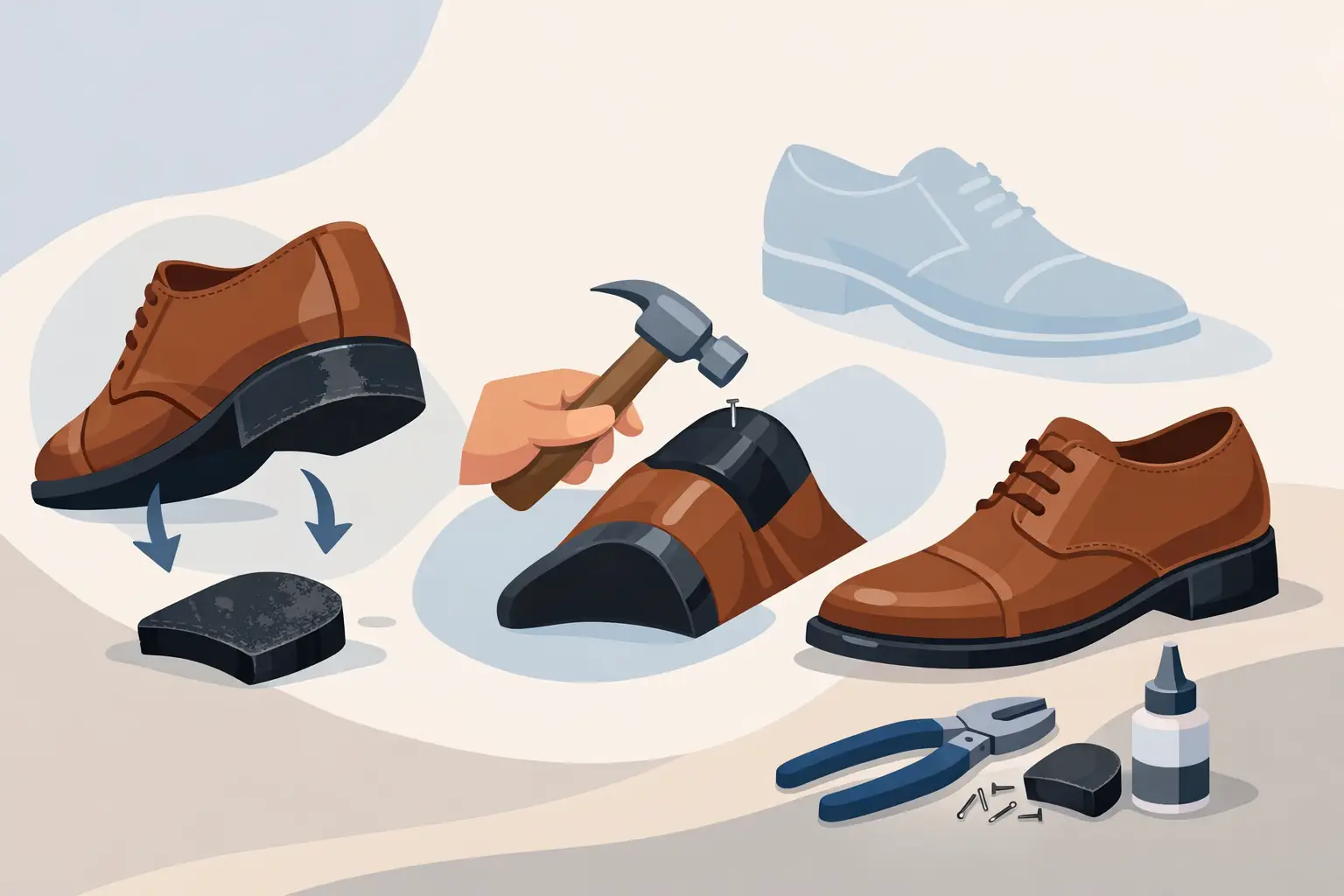
When a heel cap is replaced at the right time, the repair is straightforward. The worn piece is removed, the base is checked for damage, and a new cap is fitted to match the shoe’s size, shape, and walking requirements. On a quality repair, the goal is not just to attach a new piece. The goal is to restore stability, preserve the heel structure, and keep the finish clean and proportionate.
This is why heel cap replacement should never be treated as a cosmetic quick fix. If the cap is too hard, too soft, poorly aligned, or badly trimmed, the shoe may feel off even if it looks acceptable at first glance. Premium footwear deserves a more exact approach.
Signs your shoes need heel cap replacement
Some signs are obvious. If the metal pin is visible, the cap has worn too far. At that stage, the risk is no longer limited to slipping or noise. The exposed pin can damage flooring and start grinding into the heel base itself.
Other signs are easier to miss. One heel may wear faster than the other. The back edge may look slanted. You may notice the shoe feels less stable on smooth surfaces, or that one foot lands with more force. If you wear heeled shoes regularly for work, events, or travel, these subtle changes can appear before there is dramatic visible damage.
For men’s dress shoes and heeled boots, the pattern is similar. A worn heel cap can change posture, shorten the life of the sole edge, and create uneven pressure through the back of the shoe. On luxury footwear, small neglected repairs often lead to larger structural corrections later.
Why timing matters more than most people think
There is a narrow window where this repair is simple, clean, and cost-effective. Once the cap is fully worn through, the heel block may chip, crack, or become misshapen. If that happens, the repair moves beyond cap replacement and into heel rebuilding or refinishing.
That difference matters for both cost and originality. Replacing a heel cap early helps preserve more of the shoe’s original construction. Waiting too long usually means more intervention, more material work, and a higher chance that the finish will need to be corrected as well.
For clients who invest in premium footwear, preservation is usually the smarter choice than reactive repair. It protects the look of the pair and reduces the likelihood of avoidable damage.
Not all heel caps are the same
This is where experience shows. The right replacement depends on the shoe type, heel height, original construction, and how the pair is worn. A slim stiletto tip requires very different handling from a block heel, men’s formal shoe, or leather boot.
Material choice matters too. Some heel caps prioritize grip, some wear resistance, and some a balance of both. A softer cap may feel quieter and more forgiving underfoot, but it can wear faster. A harder cap may last longer but feel firmer and produce more sound. There is no single best option for every pair.
Luxury shoes also bring another consideration – aesthetics. The cap must be fitted neatly and finished in a way that does not cheapen the heel profile. A repair can be technically functional and still look wrong if the proportions are off. On high-value shoes, visual accuracy is part of the workmanship.
The trade-off between durability and finish
Clients often ask for the longest-lasting option, which is reasonable, but durability should not be the only factor. On refined shoes, especially those worn to offices, events, and formal settings, the walking feel and visual finish matter just as much.
A good repairer will usually recommend based on how you actually use the pair. Daily commuting, valet surfaces, hotel lobbies, polished tile, and outdoor pavements all affect wear differently. The best result is usually the one that suits the shoe and the owner, not the most generic replacement available.
What to expect from a professional heel cap replacement
A proper repair starts with assessment. The heel base should be checked for cracks, loose layers, imbalance, and edge wear. If the cap has been ignored for too long, there may also be scuffing or damage higher up the heel that needs refinishing.
Next comes removal and fitting. The old cap is taken off carefully to avoid stressing the heel structure. The replacement is selected to suit the original dimensions as closely as possible, then attached and shaped for a flush, secure finish.
The final stage is where premium service stands apart. The heel should be leveled, the edges cleaned, and the finish reviewed so the repair looks integrated rather than obvious. If necessary, minor cosmetic correction around the heel area helps restore a polished appearance.
At Shoe Clinic, this kind of repair is treated as part of the shoe’s long-term care, not as an isolated patch. That distinction matters when the pair is expensive, sentimental, or part of a professional wardrobe that needs to stay presentable.
Heel cap replacement for shoes versus full heel repair
Many clients are unsure whether they need a simple cap replacement or a broader heel repair. The answer depends on how much wear has already reached the structure above the cap.
If the heel base is still intact and evenly shaped, replacing the cap is usually enough. If the base has worn down, split, or become uneven, more work may be needed to rebuild and refinish the heel before a new cap is installed.
This is one of those areas where quick judgment can be misleading. A shoe may look repairable with a basic replacement, but if the heel is already compromised, a shortcut will not hold up well. Professional assessment avoids repeat repairs and helps protect the original shape of the shoe.
How to make heel caps last longer
Wear patterns are influenced by gait, weight distribution, surface type, and frequency of use. So there is no universal lifespan. Some heel caps wear down quickly with frequent city walking, while others last much longer when shoes are rotated and worn mostly indoors.
A few habits make a real difference. Rotating pairs gives materials time to recover. Checking the heels every few weeks catches wear early. Avoiding prolonged use once the cap becomes visibly thin is one of the simplest ways to prevent secondary damage.
Storage also helps more than people expect. Shoes tossed loosely into wardrobes or travel cases are more likely to suffer knocks that weaken the heel area over time. Well-kept shoes tend to wear more predictably and respond better to repair.
When premium repair is worth it
For inexpensive shoes with weak construction, replacement may sometimes make more sense than repair. But for well-made leather footwear, designer pairs, and shoes that fit exceptionally well, heel cap replacement is usually a practical investment.
The repair is relatively small, yet it protects much more than the bottom edge of the heel. It helps preserve comfort, posture, traction, and appearance. It also extends the usable life of the pair without changing its character.
That is especially important for clients who buy quality on purpose. If a shoe is worth owning, it is worth maintaining properly. A timely heel cap replacement keeps a favorite pair in rotation and helps you avoid the kind of wear that turns a simple fix into a full restoration.
The best time to repair a heel cap is rarely when it has fully failed. It is when the shoe first starts telling you something has changed.