That sharp clicking sound on tile is not always elegant. Often, it is the first warning that your heel caps are wearing down faster than you think. If you are wondering how to fix worn heel caps, the right answer depends on how far the damage has gone, what the heel is made of, and whether the pair is worth preserving to luxury standards.
Heel caps are the small pieces fixed to the bottom of most heeled shoes and boots. They take the daily impact that would otherwise grind directly into the heel block. Once they wear thin, crack, or fall off, every step starts stressing the actual heel structure. What begins as a minor repair can quickly become a more expensive heel rebuild if it is ignored.
For premium footwear, timing matters. A worn heel cap is usually straightforward to replace. A damaged heel block, split covering, or unstable heel stem is a different level of work entirely. That is why the smartest repair is often the earliest one.
How to fix worn heel caps without damaging the shoe
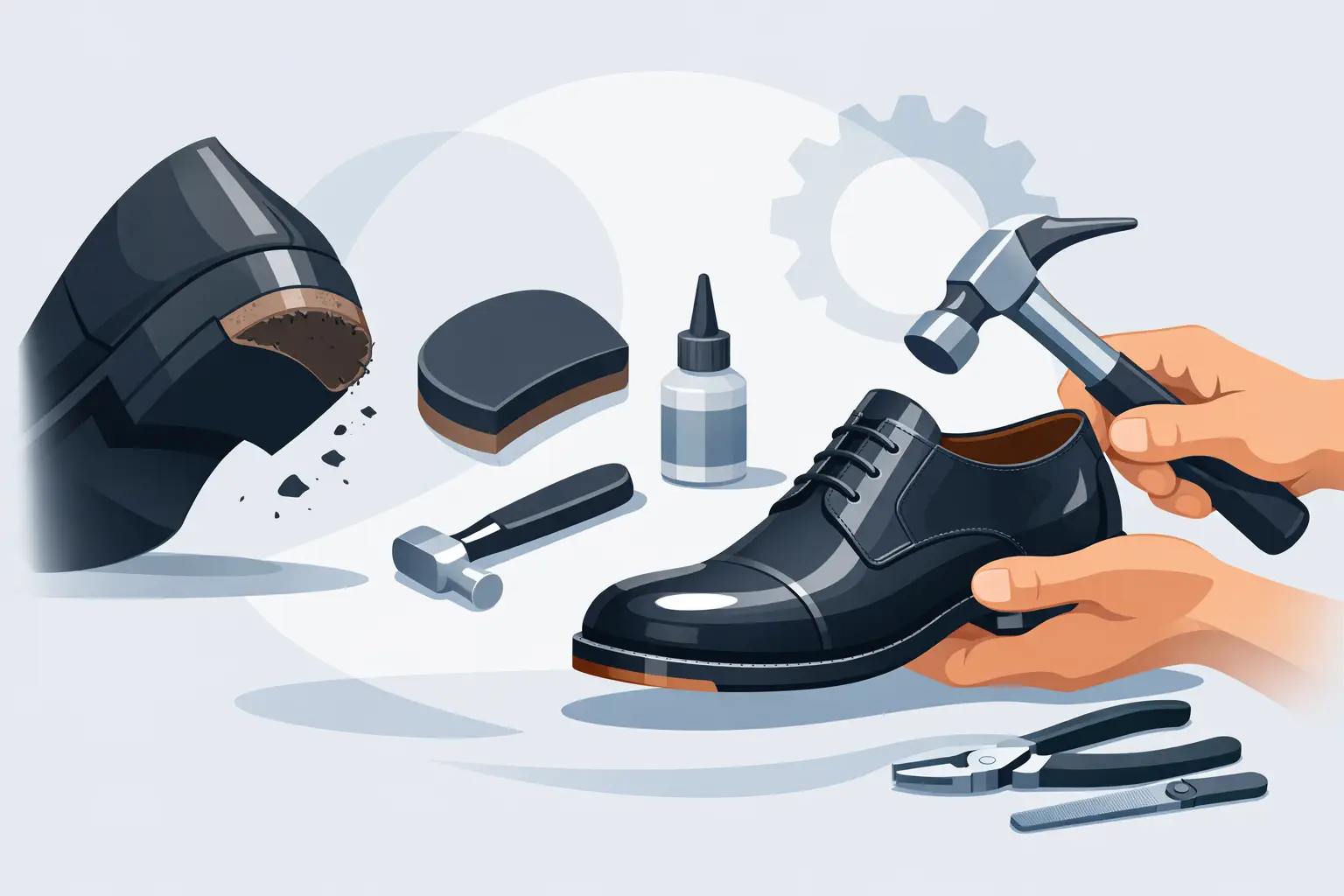
If the cap is only slightly worn and still attached evenly, replacement is usually simple in professional hands. The old cap is removed, the base is checked for level wear, and a new cap is fitted to match the heel shape and walking balance of the shoe. On quality shoes, this needs precision. A heel cap that is even slightly off-center can affect comfort, posture, and the way the shoe lands on the ground.
For very basic fashion shoes, some people try a home replacement kit. That can work in limited cases, especially if the shoe is inexpensive and the heel construction is straightforward. But there is a trade-off. Many DIY kits are generic, while heel caps are not always one-size-fits-all. If the replacement piece is the wrong diameter, too hard, too soft, or badly secured, it can loosen quickly or damage the heel base.
This matters more with designer shoes, leather-covered heels, and slim stilettos. These styles often need exact cap sizing, proper pin fitting, and clean finishing so the repair does not spoil the appearance of the pair. A rushed fix may stop the noise, but it can leave the heel crooked or visibly mismatched.
Signs your heel caps need repair now
Some wear is obvious. If the cap is visibly uneven, the metal pin is close to the ground, or one shoe feels lower than the other, the repair should not wait. The same goes for wobbling, scraping sounds, or a heel that feels unstable on polished floors.
Other signs are easier to miss. You may notice the back edge of the heel looks slanted, or the shoe starts leaning inward or outward when placed on a flat surface. Sometimes customers only realize there is a problem when they hear a harsher click than usual. By that point, the cap is often nearly gone.
With boots and block heels, the wear can be less dramatic but still serious. Because the heel base is larger, people assume they have more time. In reality, worn caps on block heels can create a tilted walking surface that strains the heel attachment and wears the sole unevenly.
When DIY works and when it does not
There is nothing wrong with wanting a quick solution, especially if you need the shoes for an event or workday. But whether DIY is sensible depends on the shoe.
If the pair is low-value, the heel is thick and simple, and there is no cosmetic wrapping to protect, an at-home cap replacement may be acceptable as a temporary measure. You still need the correct size, a stable fit, and a clean removal of the old piece. If the old pin is snapped inside the heel or the base is worn down, home tools are rarely enough.
If the shoes are luxury, sentimental, or expensive to replace, DIY is usually the wrong economy. The issue is not just attaching a new bottom piece. The heel has to remain straight, balanced, and visually consistent with the original design. Premium repair is about preserving the shoe, not just making it wearable for another week.
The professional repair process
A proper heel cap replacement starts with assessment. The heel base is checked for wear, cracks, missing layers, and alignment problems. If the cap wore down early because of gait, posture, or uneven pressure, that should also be considered. Replacing the cap without addressing the cause may only repeat the same problem.
Next comes removal and fitting. The worn cap is taken off carefully so the heel structure is not split. The repair specialist then selects a cap that matches the size, density, and profile of the original as closely as possible. On high-end shoes, matching the look matters almost as much as matching the function.
If there is minor damage around the heel base, that can often be corrected before the new cap goes on. This might include leveling, securing loose material, or refinishing the bottom edge for a cleaner result. Once the new cap is fixed in place, the pair is checked for balance so both shoes sit evenly and walk correctly.
At Shoe Clinic, this kind of work is treated as preservation, not patchwork. That distinction matters when the goal is to protect the structure and finish of premium footwear rather than simply cover the problem.
Why worn heel caps become expensive when ignored
The cap is the sacrificial layer. It is supposed to wear first so the rest of the heel does not have to. Once it is gone, friction moves into parts of the shoe that are harder and costlier to restore.
On stilettos, the exposed pin can eat into flooring and then push impact back into the heel shaft. On leather-covered heels, dragging can tear or scuff the outer wrap. On stacked or layered heels, delayed repair can chip the shape itself. That is where a small maintenance job turns into structural reconstruction and cosmetic refinishing.
For anyone who owns premium shoes, the logic is simple. Protect the original materials while they can still be protected. Replacement should be the last resort, not the first response to avoidable wear.
How to make heel caps last longer
Walking habits play a role. Hard pavement, escalator edges, rough stone, and frequent driving can all wear heel caps faster than expected. So can the way you distribute your weight. Some people naturally wear the outer edge first, while others grind down one heel much faster than the other.
You can extend heel cap life by rotating your shoes, avoiding overuse of one favorite pair, and checking the heels every few weeks if you wear them often. For work shoes and event heels, inspection matters more than people think. Catching the wear early is what keeps the repair simple.
Storage also helps. Shoes tossed loosely into closets or car trunks can pick up knocks that weaken the heel edge. Keeping them supported and upright reduces unnecessary stress, especially for slender heels.
How to fix worn heel caps on luxury shoes
Luxury footwear needs a different standard of care because the visible finish is part of the value. A heel cap replacement on a designer shoe should not look like an obvious afterthought. The repair has to respect the original silhouette, heel height, walking balance, and material finish.
That is especially true for branded pumps, leather-wrapped heels, and finely shaped sandals. With these, even a small mismatch in cap size or color can make the pair look off. More importantly, poor fitting can damage the surrounding material, which is often the hardest part to restore invisibly.
If the shoes have sentimental value or are part of a professional wardrobe, it is worth choosing repair over improvisation. Good shoes are built to be maintained. The right repair keeps them in circulation longer and protects the investment you already made.
A worn heel cap is one of the clearest signs your shoes are asking for attention, not retirement. Treat it early, treat it properly, and the rest of the shoe has a much better chance of aging beautifully.