A beautiful pair of leather shoes can look perfect on the shelf and feel unforgiving the moment you wear them out. If you are wondering how to stretch tight leather shoes without damaging the leather, the answer depends on where the pressure sits, how tight the fit is, and how valuable the pair is.
Leather does give, but not all at once and not without consequences. Push too hard with the wrong method and you can end up with warped toe boxes, weakened stitching, cracked finish, or shoes that feel loose in the heel but still pinch across the forefoot. The goal is not to force leather into submission. It is to create a better fit while protecting the shape, structure, and finish of the shoe.
How to Stretch Tight Leather Shoes Without Ruining Them
The safest approach is always gradual. Tight leather shoes usually need either a gentle break-in, targeted stretching in one area, or professional adjustment. Those are three very different problems, and treating them the same is where most damage happens.
If the shoe feels snug all over but wearable, you may only need short wear sessions at home with proper socks. If one spot is sharply painful, such as a toe seam pressing against a bunion or the vamp squeezing the top of the foot, a targeted stretch is more effective than trying to loosen the whole shoe. If the shoe is plainly too small in length, stretching will not truly fix it. Leather can ease in width more reliably than it can gain meaningful length.
This is especially important with premium footwear. Luxury leather often has a refined finish, a more structured upper, and carefully balanced proportions. That construction responds best to controlled stretching, not aggressive home hacks.
Start With a Real Fit Check
Before you try anything, wear the shoes indoors on a clean surface for ten to fifteen minutes. Notice exactly where they feel tight. Is it the toe box, the instep, the sides, or the heel collar? A shoe that slips at the heel and pinches at the front may not need stretching at all. It may simply be the wrong last for your foot shape.
Also check the material. Full-grain leather, calfskin, suede, and nubuck all behave differently. Soft calfskin may relax relatively quickly. Patent leather is far less forgiving and can crease or crack if forced. Lined shoes can also be trickier because the outer leather and lining need to move together.
The Safest At-Home Methods
If the fit issue is minor, a careful home approach can help. The key is patience.
Wear Them Gradually With Thick Socks
This is still one of the safest ways to ease leather shoes. Put on a thicker pair of socks and wear the shoes indoors for short intervals. Start with fifteen to twenty minutes, then remove them. Repeat over several days rather than trying to solve the problem in one evening.
This works best for shoes that are only slightly snug. It is less effective for a hard pressure point, and it should never feel like you are forcing your foot into the shoe. Pain is not part of proper break-in.
Use a Shoe Stretcher for Width or Toe Pressure
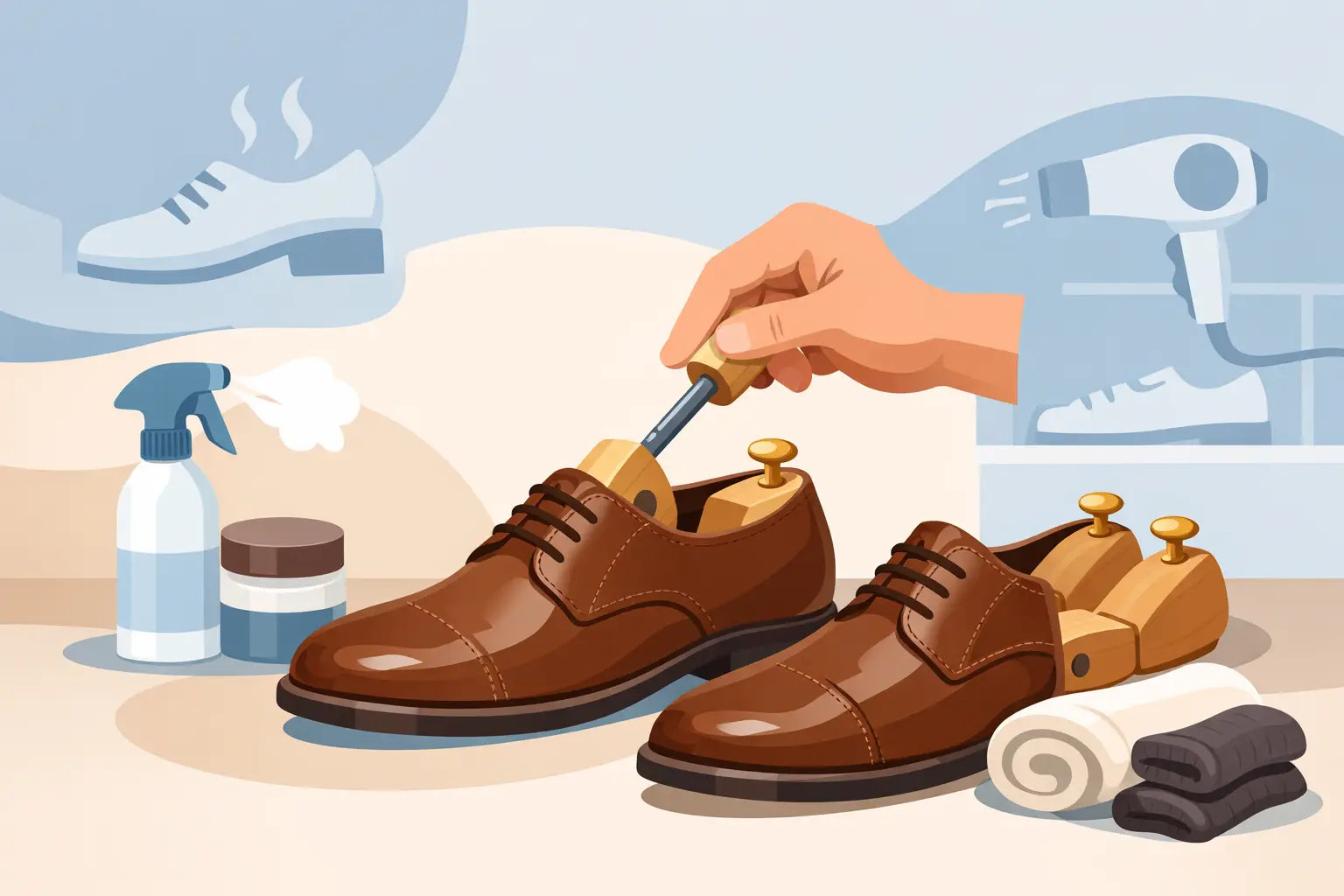
A quality shoe stretcher can be useful if the issue is width or pressure across the toe box. Choose one that matches the shape of the shoe. Insert it carefully and increase tension a little at a time. Leave it in place for several hours, then test the fit.
For localized issues, some stretchers come with pressure plugs that target one exact area. That is often better than expanding the entire front of the shoe. A broad stretch can change the silhouette. A targeted one respects the original design.
Add a Leather Stretch Spray With Caution
A leather stretch spray can help the upper relax while the stretcher or your foot gently opens the area. But this is where caution matters. Not every product is suitable for every finish, and oversaturating leather can stain it, dull it, or alter the surface texture.
Test any spray on a discreet area first. Use only a light application. If the leather is expensive, delicate, highly polished, or lightly colored, this is usually the point where professional help becomes the smarter option.
Methods That Sound Clever but Often Cause Damage
The internet is full of fast fixes. Many of them create expensive repair work.
Heat Can Dry Out and Distort Leather
Using a hair dryer while wearing tight shoes is widely suggested, but it is risky. Heat can make leather more pliable in the moment, but it can also dry the fibers, damage the finish, and set creases in the wrong places. On structured dress shoes, heat may soften areas that are meant to hold their shape.
If you value the pair, skip this method.
Freezing Water Is Not a Precision Technique
The freezer method involves filling bags with water, placing them inside the shoes, and letting expansion stretch the upper. It sounds simple, but it is not controlled. The pressure can push unevenly, stress seams, and distort the toe shape. Moisture is another concern, particularly for fine leather and leather-lined shoes.
What you gain in convenience, you often lose in shape retention.
Overstuffing the Shoes Does Not Count as Stretching
Stuffing shoes with towels, socks, or random objects rarely produces a clean result. At best, it does very little. At worst, it bulges the upper in unnatural places and leaves the fit feeling uneven.
Leather responds best to shaped pressure, not improvised force.
When Professional Stretching Is the Better Choice
If the shoes are premium, sentimental, expensive, or simply very tight, professional stretching is the safer route. This is particularly true for designer shoes, structured loafers, leather boots, and formal footwear where shape matters as much as comfort.
A professional workshop can assess whether the shoe should be stretched in width, lifted slightly over the instep, eased around a pressure point, or left alone because the fit issue comes from size rather than tension. That judgment matters. Good stretching is not just mechanical. It is diagnostic.
At Shoe Clinic, for example, stretching is treated as part of preserving the item, not just making it feel softer. That means protecting the leather finish, maintaining the original silhouette, and applying adjustment only where it improves wearability without compromising craftsmanship.
What a Specialist Can Do Better
A trained leather repair specialist has access to proper stretching tools, measured pressure, and material-specific methods. They can also spot warning signs you might miss, such as dried leather that needs conditioning before any adjustment, weak stitching around stress points, or lining separation that could worsen under tension.
Just as important, they know when not to stretch. Some shoes will only become unstable if pushed further. A premium service should tell you that clearly instead of forcing a result.
What Results You Can Realistically Expect
This is where expectations should stay practical. Leather shoes can usually be stretched modestly in width and comfort. They cannot be transformed from a full size too small into a perfect fit. If the shoe is crushing your toes because it is fundamentally too short, no safe method will solve that properly.
You should also expect some variation by style. Soft leather sneakers and unstructured loafers may adapt more easily. Goodyear-welted dress shoes, pointed pumps, and shoes with reinforced toe caps are less forgiving. Boots can often be adjusted at the shaft or width, but not infinitely across every area.
The best outcome is a shoe that feels comfortably secure, not loose. Overstretching can create heel slip, wrinkling, and a tired-looking upper long before the shoe is actually worn in.
How to Keep Leather Comfortable After Stretching
Once the fit improves, proper care helps maintain it. Use shoe trees to support the shape between wears. Condition the leather periodically so it stays supple rather than drying out and tightening again. Rotate your shoes instead of wearing the same pair hard for consecutive days, especially in hot conditions where moisture and friction put more stress on the leather.
If you use inserts, test them after stretching. Even a thin insole can change the fit enough to bring back pressure across the top of the foot.
A good pair of leather shoes should feel better with wear, not worse. If they still cause pain after careful stretching, the issue may be the last, not the leather. In that case, protecting the shoe from damage is often the smarter choice than forcing one more fix.