A leather jacket rarely fails all at once. It usually starts with a cuff that looks dry, a collar that darkens from skin contact, a zipper that drags, or a finish that loses its depth under strong light. That is exactly why leather jacket maintenance and restoration should begin early. Small signs of wear are easier, safer, and less expensive to correct than advanced cracking, staining, lining damage, or structural distortion.
For premium jackets, especially designer pieces or well-made vintage styles, the goal is not to make the jacket look artificially new. The goal is to preserve its character while correcting damage that shortens its life. Good restoration respects the original grain, color, silhouette, and hardware. Poor repair work does the opposite – it over-dyes, stiffens, stretches, or replaces details that gave the jacket its value in the first place.
What leather jacket maintenance and restoration really includes
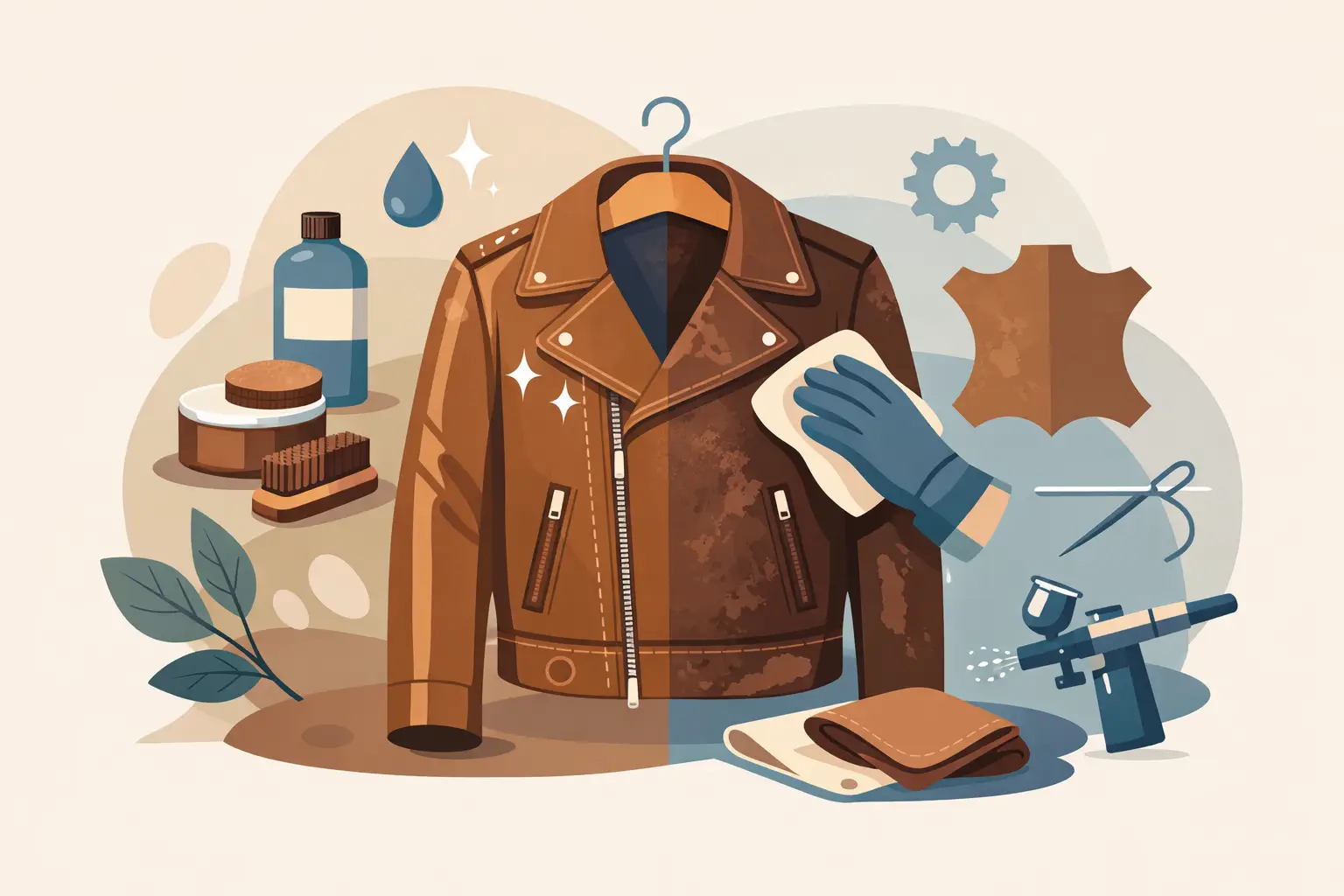
Many owners think maintenance means wiping the jacket down and hanging it properly, while restoration means fixing major damage. In practice, the two overlap. A proper care plan may include cleaning, conditioning, stain reduction, odor treatment, zipper repair, seam reinforcement, lining work, shape correction, and finish revival. Restoration goes further when there is peeling, fading, scuffing, deep dryness, color loss, torn panels, or hardware failure.
The right approach depends on the type of leather. Lambskin reacts very differently from cowhide. Suede and nubuck require an entirely different process than smooth finished leather. Patent-coated leather brings its own limitations. This is where generic home care advice often causes trouble. What helps one jacket can permanently mark another.
The first rule: clean less often, but clean correctly
Leather does not respond well to constant product use. Over-cleaning strips natural oils and can leave the surface flat or dry. Under-cleaning allows sweat, dust, body oils, and environmental residue to settle into the finish. The balance matters.
For most jackets worn in rotation, light maintenance every few wears is enough. A soft dry cloth can remove surface dust. If the jacket has been exposed to city pollution, light moisture, or a crowded event, a gentle wipe with a clean cloth is usually safer than reaching for consumer sprays or soaps.
The moment you see darkened areas around the collar, makeup transfer, food splashes, ink marks, or stiffness after getting wet, the jacket needs a more careful assessment. Delaying treatment can make a stain less removable. On the other hand, aggressive spot cleaning at home can spread the damage or disturb the color coating.
When DIY care is reasonable
Basic upkeep at home works when the issue is minor and the leather is stable. Dust removal, correct hanging, and controlled storage are sensible owner tasks. A small amount of leather conditioner may help some smooth leathers, but only if the formula suits the finish and is tested discreetly first.
Where people get into trouble is using too much product, using household cleaners, or rubbing one spot until the finish changes. If the jacket is expensive, sentimental, vintage, or visibly damaged, caution is the premium choice.
When professional restoration is the better call
If the leather feels dry and papery, the color is wearing through, the jacket has absorbed odor, the lining has torn, or the zipper has become unreliable, professional service is usually the safer route. Premium restoration is about control. The technician can evaluate whether the issue is cosmetic, structural, or both, then treat the jacket in the right order.
That order matters. Conditioning before proper cleaning can lock in dirt. Color touch-up before surface preparation can look patchy. Replacing hardware without checking surrounding leather can create stress around the repair.
The most common leather jacket problems
Dryness is one of the most frequent issues, especially in climates with heavy air conditioning, heat, or fluctuating humidity. Dry leather loses flexibility first. If ignored, it can begin to crease sharply and crack at pressure points such as elbows, shoulders, and pocket edges.
Staining is another common concern. Body oils, fragrance, rain marks, dye transfer from dark clothing, and food contact all behave differently. Some stains sit on the surface. Others migrate into the finish or beneath it. Quick treatment improves the chances of reduction, but not every stain can be erased completely. Honest restoration work focuses on the best achievable result without harming the jacket.
Then there is fading. Sun exposure and wear gradually flatten the richness of the original color, especially on black, brown, burgundy, and fashion shades with a soft sheen. Recoloring can help, but it should be measured. Full recoloring is not always necessary. In many cases, selective refinishing gives a more natural result and preserves the jacket’s original look.
Hardware problems are often underestimated. A broken zipper can make the jacket effectively unwearable even if the leather itself is in excellent condition. Snaps, pulls, buckles, and stud details also need careful replacement. On luxury or premium jackets, the wrong metal tone or oversized part can reduce the garment’s visual integrity immediately.
Storage habits that protect value
A jacket can come back from expert restoration and still deteriorate quickly if it is stored badly. Thin wire hangers distort the shoulders. Plastic covers trap moisture. Crowded closets press creases into the sleeves and body. Heat sources dry leather from the inside out.
A broad, structured hanger is the simplest upgrade. It supports the jacket’s shape and reduces stress at the shoulder line. Breathable storage is also important. Leather needs air circulation, especially after wear. If the jacket has been exposed to rain or humidity, let it dry naturally at room temperature before it goes back into the closet.
Long-term storage should be cool, dry, and dark. Direct sunlight can fade panels unevenly, and this is difficult to reverse perfectly. If you rotate jackets seasonally, inspect them before storage and again before wearing them next season. A problem caught early is usually a straightforward service. A problem discovered after months of neglect tends to be more involved.
Restoration trade-offs every owner should understand
Not every jacket should be restored the same way. Some owners want a cleaner, sharper, near-new finish. Others want the original patina preserved. Both are valid, but they require different methods.
For example, a full color refresh can dramatically improve a tired jacket, but it may soften some of the age marks that gave it personality. A heavy conditioning treatment may improve flexibility, but it must be calibrated so the leather does not become overly dark or greasy. Even stain removal has limits. The safest treatment may reduce a mark substantially without chasing a perfect result that risks finish damage.
This is where working with an experienced leather specialist matters. Premium care is not about doing the maximum. It is about doing what the jacket actually needs, and no more than that.
How a premium service approaches leather jacket restoration
A proper restoration process begins with assessment. The technician checks leather type, finish stability, wear pattern, lining condition, seams, hardware, previous repair attempts, and areas of contamination. From there, the treatment plan is built in stages.
Cleaning is typically first, followed by controlled conditioning if needed. Then come corrective services such as stain treatment, color blending, stitching repair, zip replacement, lining restoration, or shape correction. Final finishing is what brings the jacket back into visual balance. That may include surface refinement, polish adjustment, or protective finishing, depending on the material.
For owners of premium wardrobes, convenience matters too. A service-led workshop should make the process clear from consultation to completion. That includes realistic expectations, visible expertise, and careful handling. At Shoe Clinic, that standard of care is central to how leather goods are restored – with respect for both craftsmanship and the client’s time.
How often should a leather jacket be serviced?
There is no fixed calendar that suits every jacket. Frequency depends on use, climate, exposure, and leather type. A jacket worn occasionally for evenings out may only need light professional care once in a long while. A favorite travel jacket or daily winter piece may benefit from more regular attention.
As a rule, service the jacket when you notice change, not just damage. If the leather starts looking thirsty, the finish appears dull, the zipper feels rough, or the collar shows buildup, that is the right time to act. Preventive care keeps restoration smaller and preserves more of the original material.
A well-made leather jacket can remain in excellent rotation for years, sometimes decades, if treated with restraint and expertise. The smartest owners do not wait for obvious failure. They treat maintenance as part of ownership, the same way they would for fine shoes, a premium handbag, or any item worth keeping. Give the jacket the right care before wear becomes damage, and it will keep rewarding you every time you put it on.