The moment you feel the ground through a favorite pair, the question arrives fast: repair them or replace them? For premium footwear, that answer is rarely simple. A proper shoe sole replacement service is not just about attaching new rubber or leather to the bottom of a shoe. It is about restoring support, preserving shape, and protecting the life of a pair you chose for its craftsmanship in the first place.
Cheap shoes are often built to be discarded. Luxury and well-made shoes are different. Their materials, construction, and fit improve over time, which is exactly why sole damage should be handled carefully. The right repair can return comfort and extend wear for years. The wrong repair can distort the silhouette, affect balance, and reduce the value of the shoe.
What a shoe sole replacement service actually does
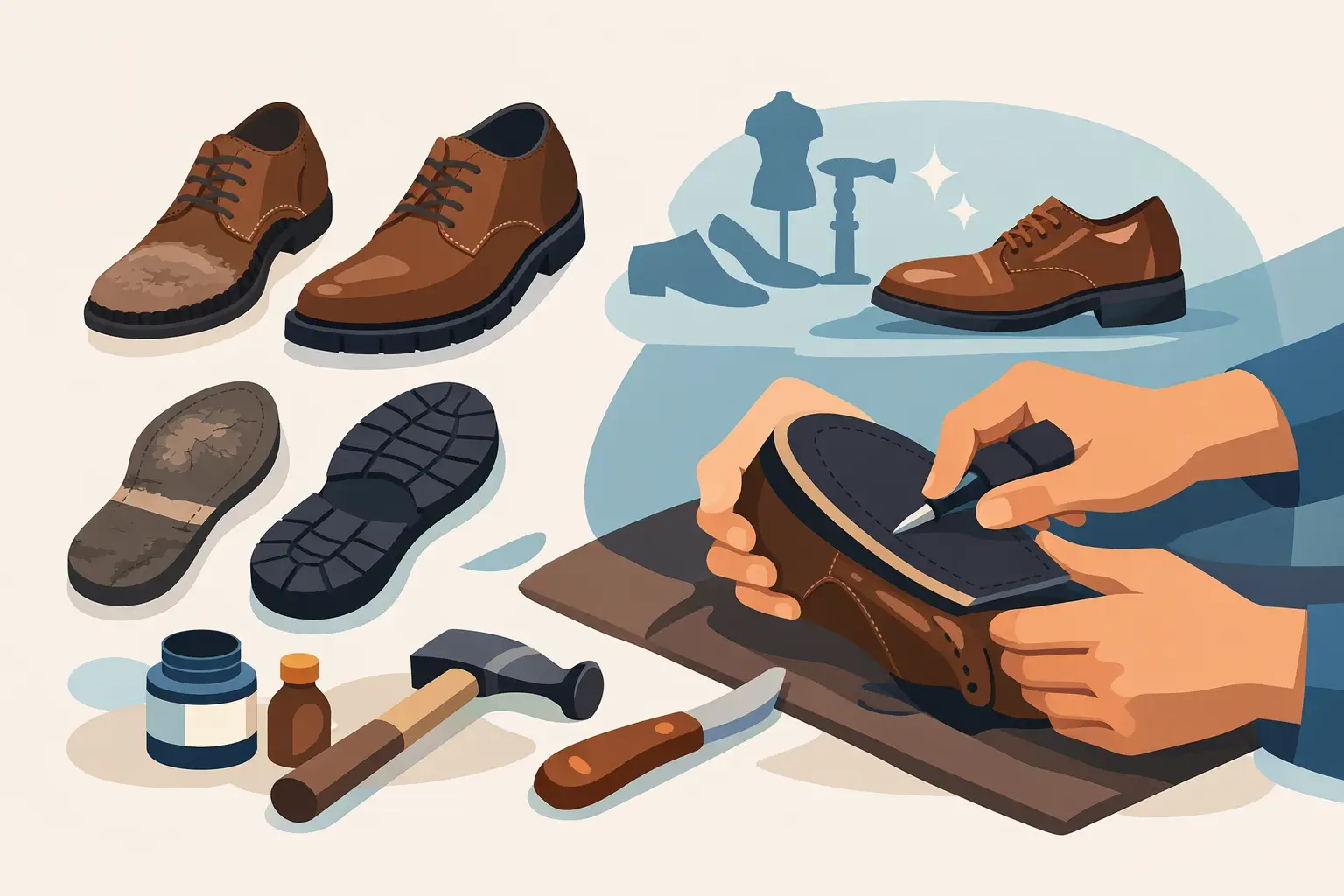
Many customers use the phrase loosely, but sole replacement can mean several different levels of work. In some cases, only the outer sole is worn down and needs to be replaced while the upper remains in excellent condition. In others, the repair also involves rebuilding the midsole, reinforcing the heel block, correcting separation, or replacing heel caps at the same time.
That distinction matters. A basic fix may solve visible wear, but a premium repair looks deeper. If the sole has thinned unevenly, moisture has entered the construction, or the shoe has begun to lean to one side, a cosmetic patch will not be enough. A proper assessment should look at traction, flexibility, bonding, stitching, and how the sole supports the original structure.
For leather soles, the job requires precision in matching thickness, finish, and edge shape. For sneakers or mixed-material shoes, the challenge is often finding the right replacement material and preserving the original profile. Good repair work should never make a refined shoe look bulky or altered.
Signs you need shoe sole replacement service
Not every worn sole needs full replacement, but some signs should not be ignored. If the tread is nearly gone, the heel is wearing at an angle, the sole is separating from the upper, or the front of the shoe feels soft and unstable, the issue has moved beyond normal wear. Waiting too long can cause secondary damage to stitching, lining, and even the way the upper sits on the foot.
Water exposure is another warning sign. Once moisture starts entering through a cracked or worn sole, the shoe can lose shape from the inside out. This is especially risky with leather-lined or luxury shoes where internal deterioration may not be visible at first. By the time the outside looks badly damaged, the repair may be more complex than it needed to be.
There is also the comfort factor. Customers often assume discomfort means the shoe itself has reached the end of its life. In reality, tired soles can change the way pressure is distributed across the foot. Replacing them can restore a pair that still fits beautifully but no longer feels right.
When replacement is worth the investment
A premium shoe sole replacement service makes the most sense when the upper leather is still strong, the shoe has good original construction, and the pair holds financial or personal value. That could mean designer loafers, leather boots, formal shoes, or everyday luxury sneakers that have molded to your foot over time.
The quality of the original shoe matters. Goodyear welted, Blake stitched, and other repair-friendly constructions are often excellent candidates because they were designed with longevity in mind. Cemented soles can also be replaced, but the process and long-term result depend heavily on how the shoe was made in the first place.
There is a practical value calculation too. If the shoe would be costly to replace, if the style is no longer available, or if the fit is unusually good, repair becomes the smarter choice. For many clients, it is not only about saving money. It is about keeping a trusted pair in circulation without sacrificing appearance.
Why premium footwear needs specialist handling
Sole work on luxury footwear is not routine cobbling. Premium shoes require material matching, clean finishing, and a strong understanding of brand-specific construction. The sole must be aligned correctly, the edges finished neatly, and the proportions preserved so the repair does not announce itself.
This is especially important with high-end leather shoes and boots, where small mistakes are easy to spot. A sole that is too thick can change the elegance of the last. A poorly matched finish can make the repair look obvious. An imprecise bond can lead to early separation, which is frustrating on any shoe and unacceptable on a premium pair.
A specialist also knows when not to over-repair. Some shoes need a full sole replacement. Others only need partial rebuilding, heel restoration, or insole correction to solve the problem properly. Good repair is not about selling the biggest job. It is about choosing the right intervention for the condition of the shoe.
What to expect from a professional assessment
The best repair process starts before any tools are used. A technician should assess wear patterns, inspect the upper, check internal support, and identify whether the issue is isolated to the sole or connected to other structural elements. For clients with busy schedules, image-based consultation can be a practical first step, but final recommendations should still be based on a close inspection.
You should expect clear guidance on what can be restored, what materials are suitable, and whether any visual differences may remain. Transparency matters. Not every sole can be reproduced exactly, especially on limited models or molded sneaker designs. But a premium service should explain the options honestly and aim for the closest functional and aesthetic result.
Turnaround time also depends on complexity. A straightforward replacement is one thing. Repairs involving stitching, heel rebuilding, edge refinishing, cleaning, and polishing are more involved. The right workshop will treat those as part of the final result, not as afterthoughts.
The trade-offs customers should know
Repair is often the right decision, but it is not automatic. Some fashion sneakers use proprietary sole units that are difficult to source or replicate. Some heavily damaged shoes have underlying issues that make repair less durable than expected. In these cases, the honest answer may be that restoration is possible, but not ideal.
There is also a difference between extending life and returning a shoe to factory-new condition. A strong shoe sole replacement service can restore wearability, improve appearance, and protect the structure, but expectations should stay realistic. The goal is expert restoration, not pretending the shoe has never been worn.
That said, many customers are surprised by how much can be recovered when the work is done properly. A pair that looks finished can often be brought back with the right sole work, edge treatment, cleaning, and conditioning. The result should feel refined, dependable, and ready to wear with confidence.
Choosing the right repair partner
If you are trusting someone with premium footwear, look beyond price alone. Ask whether they handle luxury leather regularly, whether they assess the full condition of the shoe, and whether they can explain the repair path clearly. A serious workshop will care about the original character of the item, not just the damaged part.
Convenience matters too, especially for customers balancing work, travel, and wardrobe standards. A service-led repair experience should make the process easy from consultation through handover. That is part of premium care. Expertise is essential, but so is confidence in how your item is managed.
At Shoe Clinic, that philosophy sits at the center of the work. Repair should feel precise, practical, and reassuring. When a valuable pair deserves another life, expert sole replacement is not a compromise. It is the smarter way to protect craftsmanship you already own.
If your shoes still have good structure, a sole problem is often not the end of the story. It is simply the point where skilled restoration matters most.