That sharp flap under your foot usually shows up at the worst possible time – walking into a meeting, boarding a flight, or stepping out for dinner. If you are searching for how to repair broken shoe sole damage, the right answer depends on one thing first: whether the sole has simply separated or whether the shoe has structural damage that needs professional restoration.
For everyday sneakers, a quick adhesive fix may buy you some time. For premium leather shoes, designer footwear, or shoes with stitched sole construction, rushing the repair can turn a manageable issue into a costly one. A broken sole is not always just a glue problem. It can involve worn bonding surfaces, cracked rubber, weakened midsoles, damaged welts, or moisture trapped inside the base of the shoe.
How to repair broken shoe sole damage the right way
The first step is diagnosing the type of break. A sole that has peeled away at the toe is very different from a sole that has split through the middle. One can often be reattached. The other may need partial rebuilding or full sole replacement.
If the sole is only lifting at one edge and the material itself is still intact, repair is usually straightforward. The old adhesive must be cleaned off, both surfaces must be prepared correctly, and the shoe needs even pressure while curing. If the sole is brittle, cracked, or crumbling, adhesive alone will not hold for long. In that case, the repair is less about sticking and more about restoration.
This is where many home repairs fail. People apply glue over dust, old residue, or polished leather edges and expect a lasting bond. Premium repair work is more precise. The surface needs to be cleaned, roughened where appropriate, aligned properly, then clamped with enough pressure and curing time for the adhesive to do its job.
Check the sole before you do anything
Look closely at the damage in natural light. If the front or back edge has come loose but the rest of the sole feels firm, the issue may be limited separation. If the shoe flexes in an unusual way, feels unstable under the arch, or shows a visible crack line across the bottom, the sole may be compromised beyond a simple reattachment.
Also pay attention to the upper. If the leather around the sole edge has torn, stretched, or started separating from the welt, that matters. Sole repairs are only reliable when the surrounding structure is still sound.
When a DIY sole repair can work
A careful at-home repair can work for minor sole separation on casual shoes, especially when the detached area is small and the materials are easy to bond. The key is restraint. You are trying to stabilize a clean separation, not rebuild a worn-out shoe.
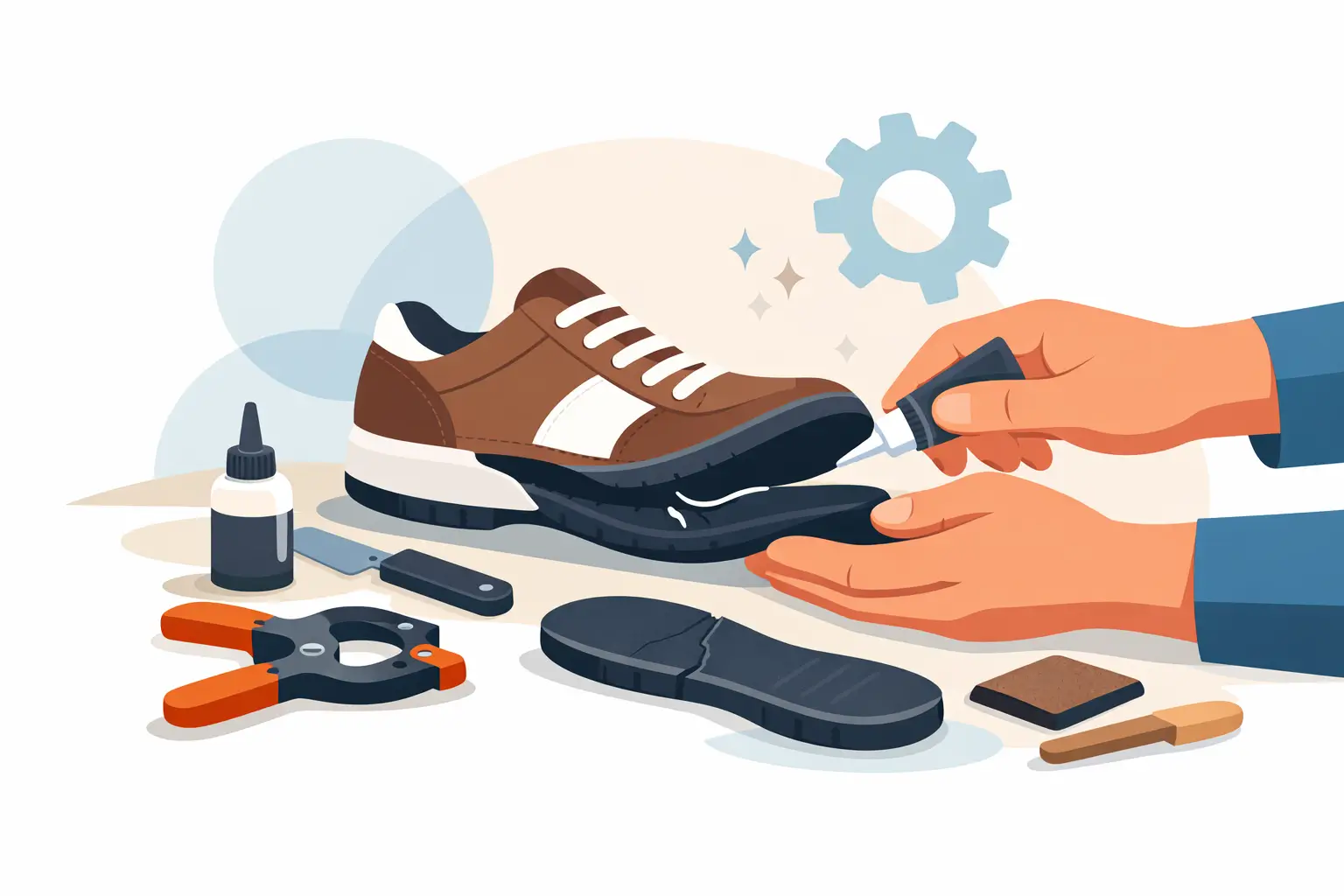
Start by gently opening the separated area without forcing it wider. Remove dirt, debris, and loose old glue from both surfaces. Let the area dry completely. If the shoe has been exposed to rain or sweat, moisture inside the layers will weaken the bond.
Apply a shoe-specific adhesive sparingly and evenly. Too much glue creates lumpiness and can prevent proper contact. Press the sole back into position carefully, wipe away excess adhesive, and secure the area with steady pressure. Then leave it alone for the full curing period. Wearing the shoe too early is one of the fastest ways to undo the repair.
This kind of fix is best treated as a practical solution, not always a permanent one. It may be enough for a secondary pair of shoes. It is less appropriate for luxury footwear, business shoes you rely on weekly, or anything with sentimental or replacement value.
When not to repair a broken shoe sole yourself
There are situations where home repair is simply the wrong move. Expensive leather shoes, branded designer footwear, boots with stitched construction, and shoes with molded or layered soles all require more controlled handling. A visible sole problem can hide internal damage, and a cosmetic fix may leave the shoe uncomfortable, uneven, or unsafe.
If the sole is split rather than detached, if the heel block is unstable, or if the insole has shifted because the base lost support, the shoe needs more than glue. The same applies when the outsole has worn too thin, the midsole is crumbling, or the shoe was repaired poorly before.
Luxury shoes deserve a higher threshold for repair decisions. The goal is not just to make them wearable by tomorrow. The goal is to preserve shape, finish, balance, and long-term value.
Materials matter more than most people expect
Rubber, leather, thermoplastic, crepe, and mixed-composition soles all behave differently. Leather soles often need careful edge preparation and, in some cases, resoling rather than spot repair. Rubber soles can bond well when the material is still healthy, but oxidized or hardened rubber may reject adhesive. Foam-based midsoles can look fine externally while breaking down internally.
That is why two shoes with the same visible problem may need completely different solutions. A premium repair workshop will assess not only the open seam but the full condition of the sole unit and upper attachment.
Signs you need professional repair
If you see cracking across the tread, repeated separation after previous gluing, uneven wear, or a gap that extends deep into the shoe base, professional service is the safer choice. The same goes for shoes that feel off-balance after the sole shifted.
A skilled repair specialist may recommend re-bonding, patch reinforcement, sole rebuilding, or complete sole replacement depending on the damage. That recommendation should be based on function as much as appearance. Shoes need to look right, but they also need to walk right.
What a professional broken sole repair usually involves
A proper workshop repair starts with inspection, not adhesive. The technician checks the sole material, attachment method, wear pattern, flexibility, and the condition of the upper. Old glue and damaged layers are removed fully, because fresh adhesive over failing material rarely lasts.
From there, the surfaces are prepared to create the strongest possible bond. In higher-end repairs, alignment is checked carefully so the shoe keeps its original profile. Pressure is applied evenly during curing, and if the damage warrants it, the repair may include sole replacement, heel restoration, edge finishing, and insole correction.
That full process matters for premium shoes. A broken sole is often connected to wear elsewhere, and addressing everything at once gives the shoe a better second life. At Shoe Clinic, this is exactly how premium footwear should be handled – as restoration, not a quick patch.
How to protect shoes after sole repair
Once the sole has been repaired, aftercare makes a real difference. Avoid wearing the pair heavily on the first day back unless your repair specialist says otherwise. Adhesives may feel set before they have fully stabilized under repeated flexing.
Keep repaired shoes dry, and never store them in overheated spaces like car trunks. Heat can soften adhesives, while trapped moisture can weaken internal layers over time. Use shoe trees for leather shoes to help maintain shape and reduce stress across the sole line.
Rotation also helps more than people realize. Wearing the same pair every day does not give the materials enough time to air out and recover. For premium shoes, that habit shortens the life of both the upper and the sole.
Can a repaired sole last a long time?
Yes, if the repair matches the actual condition of the shoe. A clean separation repaired correctly can last very well. A cracked or degraded sole that was only glued at the edges probably will not. Longevity comes down to materials, workmanship, and whether the shoe needed repair or replacement at the sole level.
This is why honest assessment matters. A quality repair should solve the problem you have, not just hide it for a week.
The smartest approach for valuable shoes
If the pair is inexpensive and the damage is minor, a careful DIY fix may be enough. If the shoes are premium, frequently worn, or hard to replace, the smarter move is to treat the issue early and have it assessed properly. Waiting often turns a simple repair into broader restoration.
A broken sole does not always mean the shoe is finished. In many cases, it is exactly the kind of problem that can be corrected well, with the right materials and the right hands. Good shoes are worth preserving, and the best repairs do more than hold them together – they restore confidence in every step.